7 Signs of Hidden Water Damage in Walls or Floors
Water damage in Arizona homes rarely announces itself with a burst pipe or a flooded hallway. More often, it seeps silently behind drywall or beneath flooring for weeks before you notice anything wrong. By the time visible damage appears, structural materials may already be compromised and mold colonies established. Catching the signs of hidden water damage early gives you the chance to fix the source before it turns into major reconstruction.
Why Early Detection of Hidden Water Damage Matters
Concealed moisture compromises your home's structural integrity and indoor air quality long before paint peels or floors buckle. Drywall acts like a sponge when it's wetted from behind. It wicks water upward and outward while the surface still looks intact, which delays discovery until saturation hits critical levels.
West Valley homeowners often miss these early warnings because our dry climate creates a false sense of security. You might assume low humidity protects your home from moisture problems, but plumbing failures and appliance leaks happen regardless of what's going on outside. The EPA notes that mold can begin growing within 24 to 48 hours of water exposure in the right conditions. Waiting for obvious damage means accepting deterioration you could have prevented, plus a higher restoration bill.
Persistent Musty Smell Without a Visible Source
A musty smell with no visible source is often the first sign of microbial growth in wall cavities or subflooring. That odor comes from microbial volatile organic compounds released as fungi feed on organic building materials like paper-faced drywall and wood framing. Your nose picks up these compounds at concentrations far below what it takes to produce visible mold, which makes smell a more sensitive early-warning system than sight.
Distinguishing Mold Odors from Normal Home Smells
Not every unusual household odor means water damage. Cooking residues, pet dander, and aging HVAC filters produce smells that differ from the earthy, damp character of microbial VOCs. Normal odors usually respond to cleaning, ventilation, or a filter change within a few days.
A musty smell that comes right back after you've aired out the room points to an ongoing moisture source rather than temporary stagnation. IICRC-certified restorers note that odor alone is reason enough for a professional assessment, since microbial VOCs move through porous materials faster than visible mold spreads.
When Odor Indicates Active Moisture Behind Walls
HVAC systems spread musty odors throughout the house, which masks where the smell is actually coming from and makes it hard to diagnose yourself. If the smell gets stronger when your air conditioning runs, moisture may sit near the ductwork or inside the air handler. Odors that get stronger when the system shuts off sometimes point to wall-cavity moisture instead, since there's no forced air left to dilute it. Finding the actual source usually takes a process of elimination, and often professional moisture-detection equipment.
Water Stains on Ceilings and Walls That Reappear
Discoloration that fades after cleaning but comes back weeks later almost always means active moisture, not old staining. Painting over old stains without fixing the underlying problem traps moisture inside the wall and speeds up rot in the framing. Knowing what's behind a ceiling stain helps you tell a roof leak apart from a plumbing failure on an upper floor or a simple condensation issue, each of which calls for a different fix.
Visual Indicators: Stains, Bubbling, and Peeling
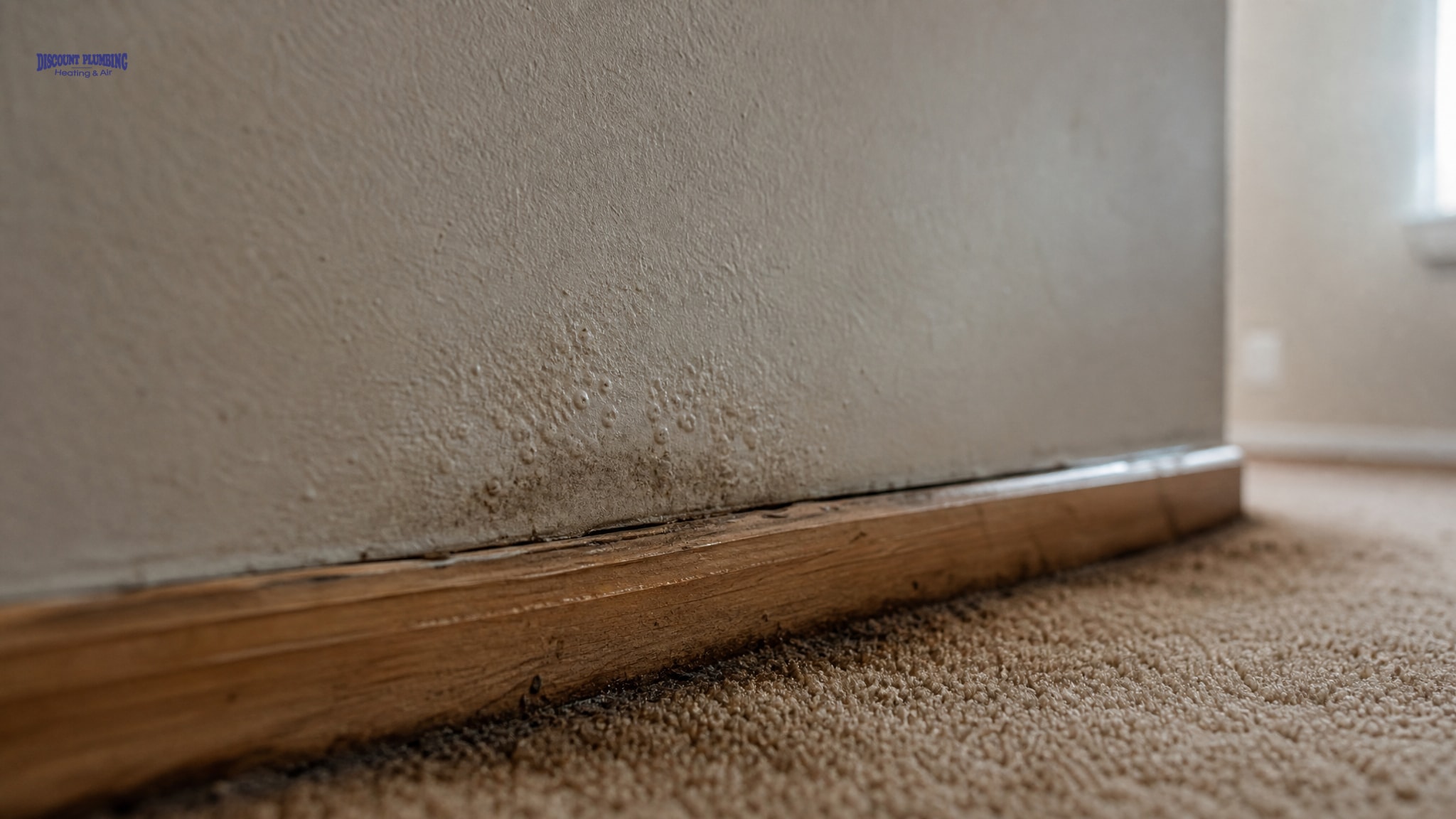
Staining patterns reveal which way the water is flowing and help locate the source. Vertical streaks suggest water traveling down wall studs; horizontal lines point to pooling at floor plates or ceiling joists. Bubbling paint or bulging drywall compound means moisture has built up enough to push against the surface finish. Peeling that follows tape joints specifically points to moisture wicking through drywall seams, where the paper tape loses its grip. These visual cues tell a trained restorer where to look further without tearing out material that doesn't need it.
Warped Flooring and Baseboard Separation
Warped flooring looks different depending on the material and how it was installed. Engineered wood can delaminate as the adhesive between veneer layers fails, while solid hardwood cups or crowns depending on whether moisture is coming from above or below. Tile shows distress through cracked grout lines or a hollow sound when you tap it, which means the bond between tile and substrate has failed. In Goodyear slab-on-grade construction, pinhole leaks in copper supply lines often warp nearby laminate flooring before a ceiling stain ever shows up.
Cupping vs. Crowning in Hardwood Floors
Cupping happens when the bottom of a board absorbs more moisture than the top, so the edges rise above the center. This pattern usually points to subfloor saturation from a slab leak or crawl-space moisture. Crowning is the opposite: raised centers, lowered edges, usually from surface water exposure or high humidity after a board has partly dried out from an earlier cupping episode. Which pattern you see tells you whether the moisture is coming from below the floor or above it.
Gaps Between Baseboards and Floor Surfaces
Baseboard separation often points to subfloor swelling from a hidden leak that's been going for a while. As particle board or OSB subflooring absorbs moisture, it expands upward and pushes the baseboards away from the floor. The gap can appear gradually over months, which makes it easy to write off as normal settling. But gaps that keep widening, or that show up alongside other moisture signs, are worth checking out. Normal settling tends to produce even gaps throughout the house; moisture-related separation usually clusters near the actual source of the water.
Unexpected Increases in Utility Bills
An unexplained jump in water usage often lines up with a hidden plumbing failure that hasn't yet caused visible damage. A running toilet behind a wall, a slow leak at a supply-line connection, a valve seal wearing out, all of these use water continuously without leaving any surface evidence. Comparing your current bill against seasonal averages for Goodyear homes helps you spot anomalies worth investigating. An increase that sticks around across several billing cycles, with no change in household habits, points to a leak rather than normal variation.
Slab leaks are their own problem because they happen beneath the concrete foundation, where water disperses through soil before it ever reaches the inside of the house. These leaks can run for months, quietly inflating your bill while eroding the soil under the slab and putting the foundation at risk. Your water bill works as an early-detection system that doesn't depend on what you can see, catching problems that stay invisible until the damage adds up.
Soft Spots and Structural Sagging
Spongy spots underfoot or a sagging ceiling section mean advanced saturation, and they call for restoration right away. These are signs that structural materials have absorbed enough moisture to lose their load-bearing capacity, which is a safety issue, not just a cosmetic one. Once soft spots show up, get a professional to look, because poking at damaged areas yourself risks causing more structural failure or exposing you to contaminated material.
Testing Drywall and Subfloor Integrity
A gentle pressure test can reveal compromised areas without doing more damage. Press firmly against suspect drywall with your palm; if the surface yields or feels spongy, there's saturation behind the finish. For flooring, walk slowly across the questionable area and note any flex, bounce, or change in sound compared to solid sections. Don't get aggressive with probing or cutting into the material yourself, though, since that can release trapped contaminants or weaken an already compromised assembly. If a spot tests soft, stop there and call in professionals who have the protective equipment and containment protocols for it.
When Sagging Indicates Framing Damage
A ceiling sag that follows the joist lines points to saturation in the structural members, not just a drywall failure. Wood framing loses a lot of its strength once moisture content passes twenty percent, and prolonged exposure leads to fungal decay that permanently cuts its load capacity. A floor that sags between supports suggests joist damage or subfloor delamination, either of which can threaten collapse under normal loads. Cases like these need an engineering evaluation alongside the restoration work, so repairs actually restore the structure rather than just cover up the damage.
Next Steps After Spotting Water Damage Signs
DIY fixes risk spreading contamination and missing the real source of the moisture. Opening up walls without proper containment releases spores into your living space, and surface treatments only address symptoms without fixing the leak underneath. Skinner & Son technicians use infrared thermography to find moisture pockets behind drywall without any destructive testing during the initial inspection. The technology picks up temperature differences caused by evaporative cooling in wet materials, which reveals problem areas that a visual inspection would miss.
This approach doesn't replace full restoration once damage exists, and it can't guarantee catching every possible moisture source in a complex building assembly. What it gives you is an accurate initial read that guides real intervention instead of guesswork and unnecessary demolition. Requesting a local water damage inspection from Skinner & Son before a minor issue turns into a major one protects your home's value and your family's health. Our team knows West Valley construction, and we bring both remodeling know-how and emergency restoration capability to every job, whether you're planning a renovation or dealing with sudden damage.
