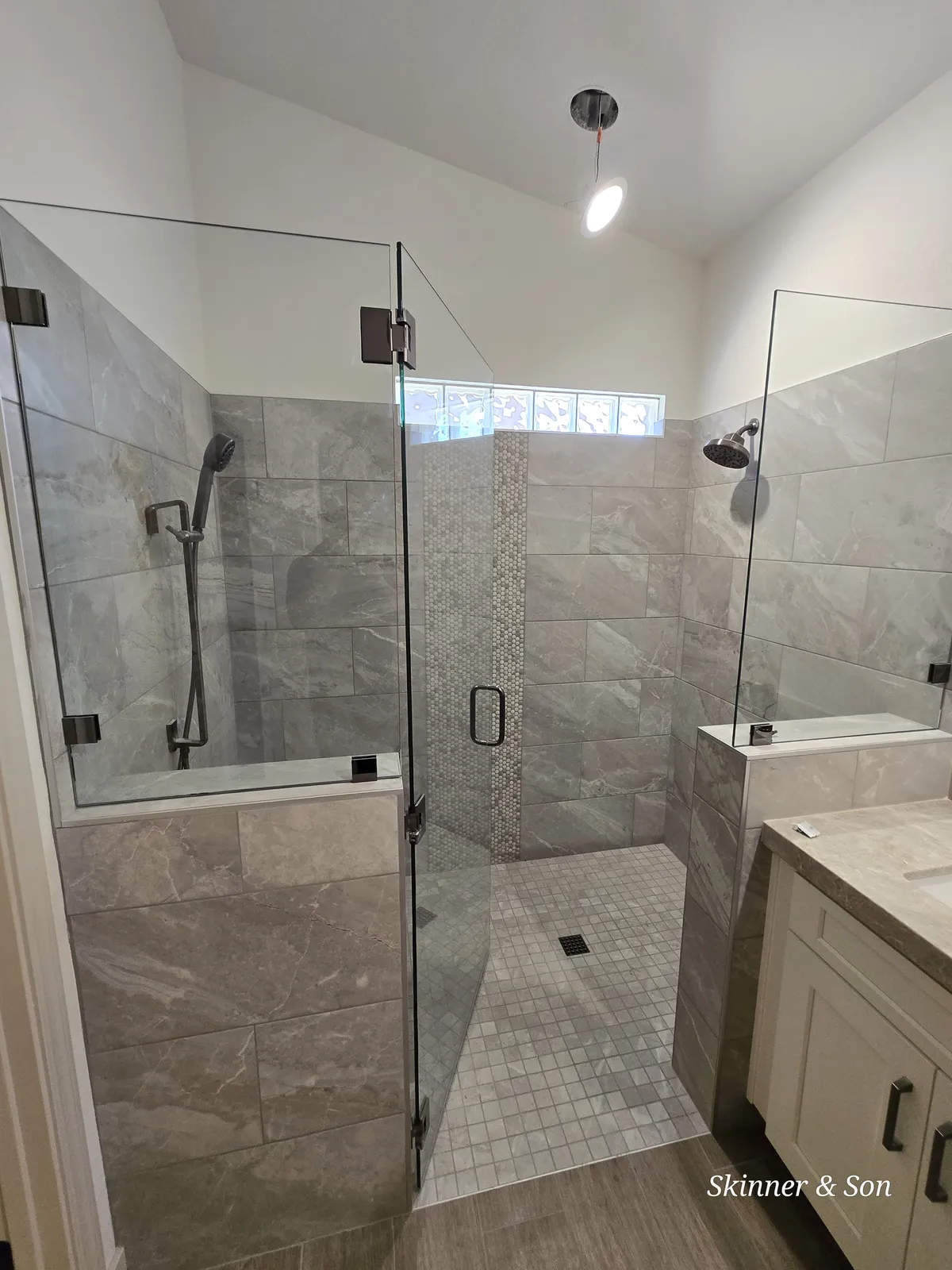
Bathroom Remodel Cost in Arizona: 2026 Pricing Guide
Planning a bathroom update means balancing your vision with the real cost of construction in the West Valley. Whether you're updating a guest bath in Goodyear or overhauling a primary suite in Litchfield Park, knowing current market rates keeps you from getting sticker shock when bids arrive. This guide breaks down realistic pricing for 2026 based on actual material costs and local labor conditions, not national averages that ignore how Arizona actually builds.
Average Bathroom Remodel Cost in Arizona for 2026
You need benchmarks grounded in today's supply chain and labor market before you start picking finishes. Bathroom remodel costs in Arizona reflect higher material prices and skilled trade shortages that have stayed elevated since the post-pandemic surge. Older online estimates will likely undershoot your true investment, sometimes by a lot.
Statewide pricing tiers by project scope
Entry-level cosmetic updates typically run $8,000 to $15,000 and cover new fixtures, paint, lighting, and flooring without touching the layout. Mid-range renovations fall between $18,000 and $35,000 and include semi-custom vanities, tile work, updated plumbing valves, and minor layout changes like swapping a tub for a shower. High-end projects over $45,000 involve structural changes, custom cabinetry, premium stone surfaces, and full mechanical upgrades that transform the space.
These tiers assume licensed contractors carrying proper insurance and warranties, not unlicensed handymen offering cash discounts.
How West Valley labor rates compare to Phoenix
Labor costs in Goodyear and the greater West Valley often run slightly lower than central Phoenix or Scottsdale, thanks to less commercial competition and shorter commutes for local crews. That advantage disappears if you hire an out-of-area contractor who charges travel premiums or doesn't know West Valley building codes and HOA requirements. Your location offers real savings, but only when you work with tradespeople who actually live and work in this corridor.
Cost to Remodel a Small Bathroom vs. a Primary Suite
Square footage alone doesn't predict expense. Fixture density and mechanical complexity drive bathroom budgets more than floor area does. A cramped hall bath packed with plumbing in thirty square feet can cost nearly as much per square foot as a spacious primary retreat, so judge your project by scope of work, not room dimensions.
Budgeting for powder rooms and guest baths
The cost to remodel a small bathroom generally lands between $10,000 and $22,000 when you keep the existing footprint. That budget covers durable porcelain tile, a quality vanity, LED mirror lighting, and water-efficient fixtures built to handle heavy family use. Costs climb fast once you relocate drain lines or add ventilation where none existed, concrete cutting and framing changes eat up labor hours out of proportion to the room's size.
Primary bath expansion and reconfiguration costs
Primary suite overhauls start around $30,000 and scale up based on how much demolition and reconstruction your design calls for. Expanding into adjacent closets, moving load-bearing walls, or adding dual vanities requires engineering review and stretches the timeline, which compounds labor costs. Set aside contingency funds for these larger projects. Opening walls in older West Valley homes often reveals outdated wiring or undersized vent stacks that need to meet current code before cosmetic work can proceed.
Walk-In Shower Cost in Arizona: Materials and Installation
Converting a tub-shower combo to a walk-in shower improves accessibility and modernizes an aging bathroom, but it involves waterproofing work that a standard replacement doesn't require. Walk-in shower costs in Arizona vary widely because a proper installation needs several trades working in sequence, and cutting corners on substrate prep guarantees future leaks no matter how good the surface material looks.
Tile vs. solid surface pricing comparison
Porcelain tile installations typically run $25 to $45 per square foot installed, including cement board, waterproof membrane, setting materials, and grout sealing. Solid surface options like cultured marble or acrylic surrounds range from $1,800 to $3,500 for complete kits with professional installation, and they finish faster with fewer grout lines to maintain. Tile gives you more design flexibility and better resale value. Solid surfaces offer practical durability for rental properties or secondary bathrooms where budget matters more than looks.
Accessibility upgrades and curbless entry expenses
Curbless entries need recessed subfloors or raised bathroom floors to get proper drainage slope without creating a tripping hazard. That structural change adds $2,000 to $5,000 beyond standard shower pricing, for concrete removal, reframing, and extra waterproofing. ADA-compliant grab bars, bench seating, and handheld showerheads add modest material costs, but they demand precise blocking during framing to hold weight safely, so plan early if you're designing for aging in place, which is common across West Valley retirement communities.
Bathroom Remodel Price Per Square Foot Breakdown
Price per square foot misleads homeowners because fixed costs dominate small-space renovations no matter the dimensions. A fifty-square-foot bathroom still needs a toilet, sink, shower valve, exhaust fan, lighting circuit, and GFCI protection. Spreading those baseline expenses across a small area inflates the per-unit number artificially.
The metric works reasonably well for comparing large primary baths against each other. It fails completely for powder rooms or half-baths, where fixture costs outweigh flooring and wall area. Itemized estimates that separate demolition, rough plumbing, electrical, waterproofing, tile, and finish carpentry give you data you can actually use for value-engineering decisions. Square-foot averages invite either underbudgeting or inflated bids padded to cover a contractor's uncertainty about actual site conditions.
Accurate bathroom pricing means evaluating existing plumbing, electrical capacity, and subfloor condition. Don't rely solely on square footage or online calculators.
Hidden Costs in Arizona Bathroom Renovations
West Valley homeowners frequently find outdated polybutylene plumbing during bathroom demos, and fixing it runs $2,000 to $5,000 before new fixtures can go in. These gray plastic pipes were common in Arizona tract homes built between 1978 and 1995, and they fail catastrophically when exposed to modern chlorine-treated municipal water. Replacing them proactively during a renovation is far cheaper than an emergency slab leak repair later.
Water damage and slab leak remediation
Bathroom remodels involving slab leak repair or full repiping typically add 10-20% to baseline project costs in Arizona, thanks to concrete cutting and restoration work. Post-tension cable systems in many Goodyear foundations complicate trenching and require specialized scanning equipment to avoid structural damage during pipe access. Budget for this possibility upfront. It prevents change-order disputes mid-project when your contractor uncovers moisture-damaged subflooring or corroded supply lines behind tile that looked fine from the outside.
Permitting, code updates, and HOA requirements
Goodyear and Avondale building departments require permits for any plumbing relocation, electrical panel upgrade, or structural modification, with fees typically running $300 to $800 depending on valuation. Inspection scheduling can add one to two weeks to your timeline during peak construction seasons, so build that administrative lead time into your completion date expectations. West Valley HOAs may add restrictions on exterior venting, window replacements, or construction hours that affect material choices and crew scheduling. Getting board approval early avoids costly rework after demolition begins.
Bathroom Renovation Cost in Phoenix Metro: Local Factors
Your project's timing affects both price and availability, since desert climate patterns create predictable demand cycles across the valley. Understanding these rhythms helps you lock in better scheduling and potentially lower rates by avoiding peak periods, when contractors are stretched thin and material suppliers face backorder pressure.
Seasonal demand and contractor availability
Spring and fall are peak renovation seasons in the Phoenix metro, as homeowners rush to finish projects before summer heat or winter holidays disrupt progress. Booking during late June through August or mid-December through January can get you more attentive service and flexible scheduling, since reputable crews have capacity gaps they'd rather fill than leave idle. Summer projects need careful coordination for exterior work or attic-access tasks because of extreme heat, but interior bathroom remodels proceed normally with the AC running.
Material sourcing advantages in the West Valley
Goodyear and Buckeye sit close to regional distribution centers that stock tile, vanities, and fixtures without the long-distance freight surcharges common in rural Arizona. Local suppliers carry deeper inventory of desert-appropriate materials, like large-format porcelain and low-VOC adhesives suited to our climate and building practices. Sourcing regionally cuts the risk of transit damage and simplifies warranty claims, since replacement parts come from nearby warehouses instead of distant factories. That keeps your project moving even when individual items arrive defective or backordered.
Getting an Accurate Bathroom Remodel Estimate
Skinner & Son provides detailed, line-item bathroom remodel estimates after on-site inspections in Goodyear and the West Valley, so pricing reflects your actual conditions instead of generic square-foot averages. Phone quotes or email estimates based only on photos can't account for hidden variables behind walls and under slabs, the things that actually determine project cost. Treat them as preliminary ranges, not binding commitments.
What to expect from an in-home consultation
A thorough consultation includes measuring existing spaces, testing water pressure, inspecting electrical panels, checking vent stack routing, and assessing subfloor integrity before anyone talks design options. Your estimator should ask detailed questions about how you use the space, your accessibility needs, and your long-term plans for the home, so the recommendations match your actual lifestyle instead of upselling features you don't need. Expect the visit to take sixty to ninety minutes for a single bathroom, with a written proposal delivered within three business days that reflects everything observed during the inspection.
Red flags in vague or lowball quotes
Proposals that skip line-item breakdowns for demolition, rough-in, waterproofing, and finish work hide contingencies that surface later as change orders. Bids well below market averages often point to unlicensed operators, uninsured workers, or omissions designed to win the contract before the real costs show up as extras. Verify ROC licensing, ask for references from recent West Valley projects, and confirm written warranty terms before you sign anything. The cheapest estimate gets expensive fast once the corners cut during bidding show up as failures in your finished bathroom.
Request your free in-home bathroom remodel consultation with Skinner & Son to get a detailed, localized estimate built on the actual site conditions at your home in Goodyear and the West Valley.
